I depends on what is "edible stuff" to you. Carrots, meat, cabage, fish, etc. have no added sugar in them. Why not simply cook your food, like most people in the world do?
From what I read here and there, Americans have completely lost foot with food, for them having a meal means to take some boxed thing out of the fridge and put it in the microwave owen for 10 mn. This is /not/ a normal meal, it's a lazy way to get one's belly filled. The normal meal for normal people is prepared at home from raw ingredients and some spices.
I'm not an American. But yes, in the end, I did end up cooking all my food, not that I eat that much ready-to-eat food anyway.
The problem is that I ended up having to make practically everything from scratch. I couldn't use pasta sauces, since they all have added sugar. Most bread has added sugar as well, so no bread for me.
That's not bread, that's sliced industrial cake branded as bread sold in wharehouses. Get your bread from a boulangerie and slice it yourself. And yes, buy no "pasta sauce" because it is just industrial pseudo tomato jam with a formula that has 50 "ingredients", just buy tomatoes and cook them slowly with some onions.
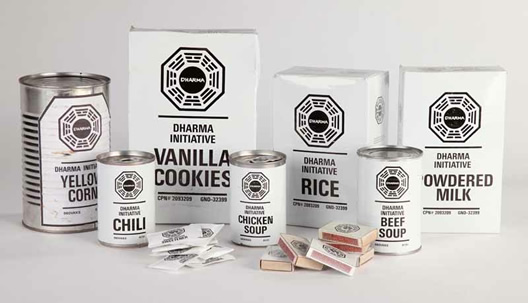
North Korea is a good inverting mirror of our modern societies, and there is always something of inspiration in the diametrically opposite. I, for one, would welcome a brandless packaging of most products, where a pack of coffee would just be a dark brown folded paper with "coffee" written on it. Same with sugar, yogurt, butter, etc. We are brainwashed into believing that sugar X is different from sugar Y but it is the same thing with different packaging, often produced in the same lines in the same factories.
Muji is a successful Japanese brandless shop where I get my clothes. We have generics drugs that are less expensive. I think a brandless Walmart would be successful too, for those who refuse to be brainwashed.
I stayed in Yanggakdo International Hotel on Yanggak Island in the river Taedong in Pyongyang on a tour, and there were two restaurants, and they were called "Restaurant 1" and "Restaurant 2". I found that quite refreshing.
"Muji is a successful Japanese brandless shop where I get my clothes. We have generics drugs that are less expensive. I think a brandless Walmart would be successful too, for those who refuse to be brainwashed."
This is one of the appeals of Marks & Spencer, who are one of the last survivors of the old British department stores. They sell clothes and food, all almost entirely their own-brand products, which are not cheap but are good quality. You can go into an M&S and buy essentials just by collecting the things on your list, without ever having to choose between brands.
Maye it is "unique" but then just because it is the simplest design possible. T-shirts are just T-shirts with nothing special, even no "tickets" (the shitty piece of cloth with all the useless warning signs that hurts the skin and serve no purpose).
I don't know if it's the case in other countries, but in France, most supermarket chains have their own "budget" brand which are generally quite explicit/generic in term of packaging.
Here is the label of the tin I ate yesterday for example:
Australia has Black & Gold brand, not specific to a certain store but always low priced and bland packaging that is identical for every product (yellow box, black text).
> I don't know if it's the case in other countries, but in France, most supermarket chains have their own "budget" brand which are generally quite explicit/generic in term of packaging.
Very common in the United States as stores don't license the brand names and so have to come up with a non-trademarked name.
The ironic thing about Muji is everything I come across there costs 50-100% more than branded products I see elsewhere. Single serving packets of curry for 800 yen? Basic shirts for 3000 yen? No thanks.
I live in Beijing and there, for the few I know (because I never shop elsewhere), clothes in Muji are good quality, simple functional design, and relatively cheap.
This is still a thing in U.S. grocery stores, it's just that they have "store brand" generic products. For instance in Costco they sell "Kirkland brand". These generics are usually a good deal in terms of quality for price.
Is it only me or this looks like a Macron-effect? I mean, President Macron did show to the world it was possible for a young fellow to hijack the elections, even in a (relatively) stable democracy. Actually, if you think about it, it seems not that hard to be (or look) much less repugnant than the old comical zombies and rotten clowns we get proposed.
He's essentially the french version of Rubio, not in the "minority candidate" sense, but in the "fallback establishment candidate" sense.
The only difference was that French elites learned from the US Republican elites, avoided internal discord and obliterated the opposition with "timely" scandals.
The only scandal was against Fillon, the candidate that was much more like traditional establishment. There was no scandal at all among the left side of the spectrum, there just could not agree on anything.
Without the scandal, it could have been Fillon president, so even more establishment, with corruption as an added bonus. I fail to see how it was an operation of the "elites".
3) Do not care at all, and consider that our bodies are pretty well tuned to handle such thing as a few particles of foreign excrement (or other dirty things).
Seriously, we have become irrational animals afraid of everything. (I would wash my hand after splashing a fly if there was a rotten corpse around, though, and would have done even without the fly because my nose would have alerted me of a chemical danger.)
Well I disagree. The background music on transitional slides can be removed. The rethorical questions ("let's pretend we do not know about digital audio") are just time fillers. Waving the hands toward an inscrustation looks as silly as the meteo girls "playing with flies in front of a green screen" on all TVs worldwide.
It is the same with most "well-written" articles in newspapers nowadays. We do not even feel it but its just canned food, a lot of jelly and chemical taste enhancer but the amount of real meat inside is near zero.
I had exactly the same impression with racism a couple decades ago in France: I met a few young guys saying on purpose a lot of racist clichés. I do not think they were really racists, just fed up with the hardcore demonization we had then.
By for some topics such as racism, I'm under the impression that the demonizing pressure is a bit lower than before, at least in France. So there is hope.
For what's happening in the US, it seems to be very frightening -- this guy has been fired for talking about some hypothesis! I wonder why the pressure is so high. Maybe because the "deep american society" remains much more sexist than in Europe, thus justifying a much stronger defense from feminists?
Also, “Google memo” threads seem to be buried very quickly on HN, which is the only place I imagine where this discussion can be held between consenting adults, how come?
The flamewar detector and flags from people who are fed up with the constant barrage of threads about the same topic. The threads about widespread sexism at Uber were treated similarly.
> Maybe because the "deep american society" remains much more sexist than in Europe, thus justifying a much stronger defense from feminists?
No my theory is that the USA is the home of these hyperleftist utopians. The US installed these uptopians as rulers in Europe after WWII.
The host always has the most immunity to the disease. The strongest critics and detractors of the uptopians also live in the US, and they are more visible as TV and movie villians in US media.
Some people are happy to shoot themselves in the feet (looking at your brexit) but I don't think Chinese are like that. Stopping right now all English courses in China would be harmful and unproductive. As would be blocking VPNs for real.
> Some people are happy to shoot themselves in the feet (looking at your brexit) but I don't think Chinese are like that.
History disagrees with that statement. Communism was China shooting itself in the foot in the first place. The Great Firewall is China shooting itself in the foot. The lack of numerous freedoms the developed world takes for granted, is China shooting itself in the foot. China has a very long history of regularly shooting itself in the foot. They'd be a far more advanced nation economically, scientifically and culturally, were they to end the Communist Party oppression.
Brexit happened after a long period of political stability in a country with a long, mature history at the forefront of international politics. Communism in China came to the fore during the tumult of the second world war, which had foreign troops razing half of China - after a period where China was colonised by a different foreign power which kept the powers in China as ignorant as possible. They're very different things.
There is an odd tendency to ascribe some sort of scheming long-term vision to the Chinese government, probably based on memories of dynasties that managed to reign over an empire for centuries. The CCP is nothing like that. As soon as they got into power, they triggered the "great leap forward" (miscalculated "modernization", and famine that killed dozens of millions), followed by the Cultural Revolution that bordered on civil war and spawned a generation of illiterate, starving zombies ("lost generation ").
The CCP has a pretty terrible record at avoiding shooting themselves (or China) in the foot. They probably killed more Chinese people than Imperial Japan did.
The current norms of CCP leadership were established in the aftermath of the Cultural Revolution for the express purpose of avoiding such a catastrophe in the future. Since 1989, the guiding philosophy of China's central leadership has been economic growth in exchange for limits on political freedom. The CCP is currently shooting itself in the foot in numerous ways (the VPN ban being one of them), but crippling the country's economic competitiveness by limiting English language instruction is not something they would ever consider.
You are right that the party became notably less insane when Deng Xiaoping took over. However the various administrations since then have spent significant resources and time going in different (and sometime opposite) directions, and not always in a blunder-safe way. The example I have in mind is the declaration last month by the foreign affairs ministry that the Hong Kong "Joint Declaration" is not binding any more for China. They rolled that back a week later (probably after they realized where that was going), but essentially for a few days their official stance was "we don't respect treaties we have signed, even the ones we pretty much wrote and that gave us what we wanted. Our word as a government has no value". Kind of a risky move, and could have set a precedent.
As for your specific point regarding teaching English, I think you're right they wouldn't do that now, however it's a bet I could see them make if their domestic economy becomes slightly larger. After all there are other countries (Japan, Russia, France...) where English has a low penetration rate, and they get away with it.
> However the various administrations since then have spent significant resources and time going in different (and sometime opposite) directions, and not always in a blunder-safe way.
Yeah, because there are different factions within the party that sometimes have conflicting goals or ideas. It's not as unified as outsiders think it is. I agree that they aren't always scary competent. The whole Bo Xilai scandal was a huge black eye that they didn't see coming, for instance.
> The example I have in mind is the declaration last month by the foreign affairs ministry that the Hong Kong "Joint Declaration" is not binding any more for China.
What? I didn't hear about this at all. That does seem pretty crazy. Do you have a link to a news article?
> After all there are other countries (Japan, Russia, France...) where English has a low penetration rate
Don't know about Russia or France, but Japan still teaches English in schools. Japan and China probably have a similar "penetration rate" for English. They do lots of business done with English speaking countries but the average man on the street is by no means fluent. I suspect the same is true of France. If domestic consumer demand increases, China might be able to get away with it, but the export economy is so big, I can't see them making that choice.
>> On Friday, the eve of the 20th anniversary of Hong Kong’s handover, on 1 July 1997, Beijing controversially announced that the Sino-British joint declaration was “now history” and no longer had “any practical significance nor any binding force”[1]
Re: language. I am not saying that English is not taught at school in these countries (it is), only that it has minimum impact in these societies in practice. Right now China is trying to move away from its export economy (where indeed English is needed), and if it does I think it would make sense for a paranoid government to think "well these other countries are functioning without the common citizen knowing much English, so let's stop teaching it except to some professions" -- and pronto, the next generation is cut off from 99% of foreign news sources.
Culture have traits, yes, and it's extremely difficult to name them with the words of another culture, and judging them bad or good from another culture is adventurous, except for obvious violations of core human values which I don't think we would find in Japan.
In the first paragraph the author says it is impossible to critique Japan traits. That simply shows that he or she has understood nothing of the Asian way of life. I've been working in a Chinese company since 6 years and never heard any critique or irony or any other form of explicit negative comment, even about competitor products. That is just not how you do it there. There are many other ways to express your personal preferences. If in ten years you don't get this, you just better go back home earlier.
That's not core to me. The litigation system is highly cultural, can be a village assembly before the eldest, a full judiciary system as we have in the West, can be based on Roman law or jurisprudence. Presumption of guilt is just another way.
You can't shorten it like that. It's a complex litigation system were we westerners, when applying our own interpretation grid, see a presumption of guilt.
For the core human values, a good example is the case of a little girl running dangerously near a well, any human except some psychopath will jump on their feet and save her. Here we all share something that can be qualified as universal.
> when applying our own interpretation grid, see a presumption of guilt.
You're arguing that "presumption of guilt" is somehow contextually relative. It's not. If 99% of "trials" result in a conviction, there's an unequivocal presumption of guilt.
I agree that no good food come out of the microwave, but the reason is in the ingredients not in the owen. Cooking good Chinese food, for instance, do not require "many many tools", just the basics you'd find in every kitchen in China, but it requires freshly cut veggies and meat, and different spices, and none of what you eat was processed in a factory (except msg maybe)
Amen. Good ingredients, a love for food and the ability to tune out those that try to explain that one cannot cook or that cooking requires intense training and a container full of tools.



I depends on what is "edible stuff" to you. Carrots, meat, cabage, fish, etc. have no added sugar in them. Why not simply cook your food, like most people in the world do?
From what I read here and there, Americans have completely lost foot with food, for them having a meal means to take some boxed thing out of the fridge and put it in the microwave owen for 10 mn. This is /not/ a normal meal, it's a lazy way to get one's belly filled. The normal meal for normal people is prepared at home from raw ingredients and some spices.