I'd have liked to have seen two control groups. One group which received the "mock brain stimulation" and another which received no brain stimulation. It may be the case that playing noise into someone's brain has a detrimental effect on performance which is less prevalent when the stimulus roughly corresponds to the activity of a healthy brain.
If you drop a heavy weight onto someone's foot, they're likely to perform better on tests of mental acuity than if you were to drop a heavy weight onto their head. That doesn't necessarily mean that dropping the weight on their foot improved their performance, just that it was less harmful.
Unless I'm missing something, the poor experimental design coupled with the small sample size makes me very skeptical of the results. I'd love to see another experiment with more conclusive findings either way.
I read the "mock brain stimulation" as meaning the headset seemed to be doing something but was doing nothing. I guess the critique of the experiment would more or less stand, though it'd be slightly rearranged. Maybe dropping weights on any part of the body improves performance?
It's "sham stimulation" (that's the technical term used in research) and, in the case of direct current stimulation, it means what you described. The current used for tDCS is too low to be perceived, so no current is an acceptable placebo.
Ah, now I know! Serves me right for not reading the original paper before criticizing their experimental method. Thanks for the technical term. I see that the sham stimulation can still incorporate some ramp-up and ramp-down current, but I'll have to dig deeper to understand how those brief currents (or lack thereof) affect the quality of the control and the specifics of this experiment.
I think there needs to be another control group - people who are not aware that they are doing the experiment.
The reason is that I am not convinced that this experiment shows causality with regards to the transferred brain waves - rather that it shows that novice pilots who think they may be getting expert-pilot brainwaves sent to them, simply perform better.
Which is to say, I think that what this experiment shows is that those who have willed themselves to be recipients of expert-pilot brainwaves, simply become better pilots.
The novices performed 33% better could be totally like a cognitive placebo effect OR MORE LIKELY the fact that they had to do it ONE MORE TIME LOL... I am either missing something really big or this is a draft of an April 1st joke released early
I remember looking into tDCS quite recently with the thought of boosting intelligence as there are actually consumer devices available right now that claim to be efficacious at increasing attention, memory, etc. Part of that process involved looking at the studies on Google, checking out meta-analysis etc - and what I found was there didn't seem to be enough evidence to conclude anything substantial.
Anyway, picture me staring at a bunch of electrodes on a fancy, high tech startups website and seriously considering whether strapping them to my head was a good idea. I felt kind of ridiculous even entertaining the thought after the scant scientific evidence - especially if the end goal was to increase IQ. Needless to say the device did increase IQ but only through the direct act of not purchasing it.
(I don't mean to be so negative but intelligence doesn't seem that easy to hack.)
Is it wrong to think Kurzweil has gone off the deepend? I know he was extremely productive in his early years, but everything about him just makes him seem like a crank who spends most of his energy marketing himself as some kind of thought leader. IMO anyone who calls themselves a "futurist" has very little to contribute to the technology they are preaching.
He's ALWAYS been a crank, this generations mad genius, doesn't mean he's wrong though. Just means our world is about to explode as AI starts infiltrating EVERYTHING. But he's contributed PLENTY to the future -- AI needs to be able to "see" and "hear" and understand what it sees and hears, and he created OCR technology AND voice to speech -- both of which had to come before Super AI's could ever be conceived. So he definitely knows what he's doing and is helping push us towards that means.
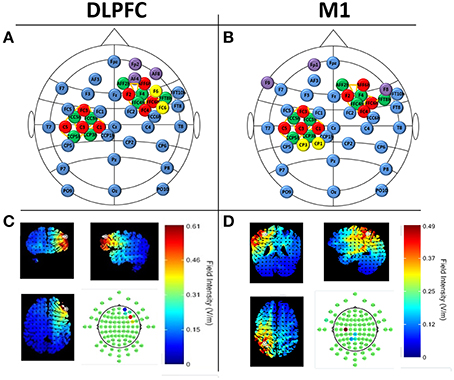
The headline is a little confusing. Basically, these researchers measured the brainwaves of expert pilots during a flight simulation, and then stimulated (using transcranial direct current stimulation, or tDCS) the brains of novice pilots during a flight simulation to match the brainwaves measured in the experts. They found that the real tDCS-applied group showed 33% "increase in skill consistency", as compared to the sham tDCS-applied group.
The interesting bit is the tDCS use, really. As many here may know, diy tDCS has become a popular trend among lifehackers. It is thus vital to note the possible negative side effects of tDCS, as pointed out by the editor of Kurzweil AI in the comments of the blog post: "Electric brain stimulation decreases IQ scores and racial prejudice" http://www.kurzweilai.net/electric-brain-stimulation-decreas...
That is without a doubt the freakiest thing I have read this week.
(Tl:dr - they recorded trans-cranial currents in motor and working memory areas of experts landing a plane and replayed that or a control into novice pilots heads. The novices perfeomed 33% better.)
Aboslutely. I'll admit to not having read the actual study, but saying that 33% of pilots improved is fairly meaningless. You could also say that 67% of pilots didn't improve.
It might even be the case that those 67% that didn't improve had half of them get worse. In which case we'd have 1/3 improve, 1/3 no change and 1/3 get worse. Or in other words, a boring average distribution that means absolutely nothing...
Extraordinary claims require extraordinary evidence, not a study with a sample size of 32, including the control group. I remain super skeptical that the statistically significant result actually implies a real result (and the smaller the study, the lower the chances.)
It just says "the reduced variance reached statistical significance in >33% of individual N-back trials comparing DLPFC stim with DLPFC sham" which I think isn't quite the same as having a statistically significant overall result. If you look at the results the sham group is better in quite a few of the graphs.
I get the impression that the study results weren't quite as impressive as they had hoped, and they have added some spin to make it look better.
IMHO This article is interesting but slightly misleading. Its known from other research that certain tasks are easier in a certain "brain state" which tDCS could stimulate.
A classic example would be that a Blue Angels pilot goes through the entire display routine, in their heads before they strap into the cockpit. [0] If the pilots didn't mentally prepare to fly precisely, even a highly experienced pilot couldn't achieve that level of performance. Its likely that the brain activity between different flights, and between different flight leaders, would be somewhat consistent.


If you drop a heavy weight onto someone's foot, they're likely to perform better on tests of mental acuity than if you were to drop a heavy weight onto their head. That doesn't necessarily mean that dropping the weight on their foot improved their performance, just that it was less harmful.
Unless I'm missing something, the poor experimental design coupled with the small sample size makes me very skeptical of the results. I'd love to see another experiment with more conclusive findings either way.